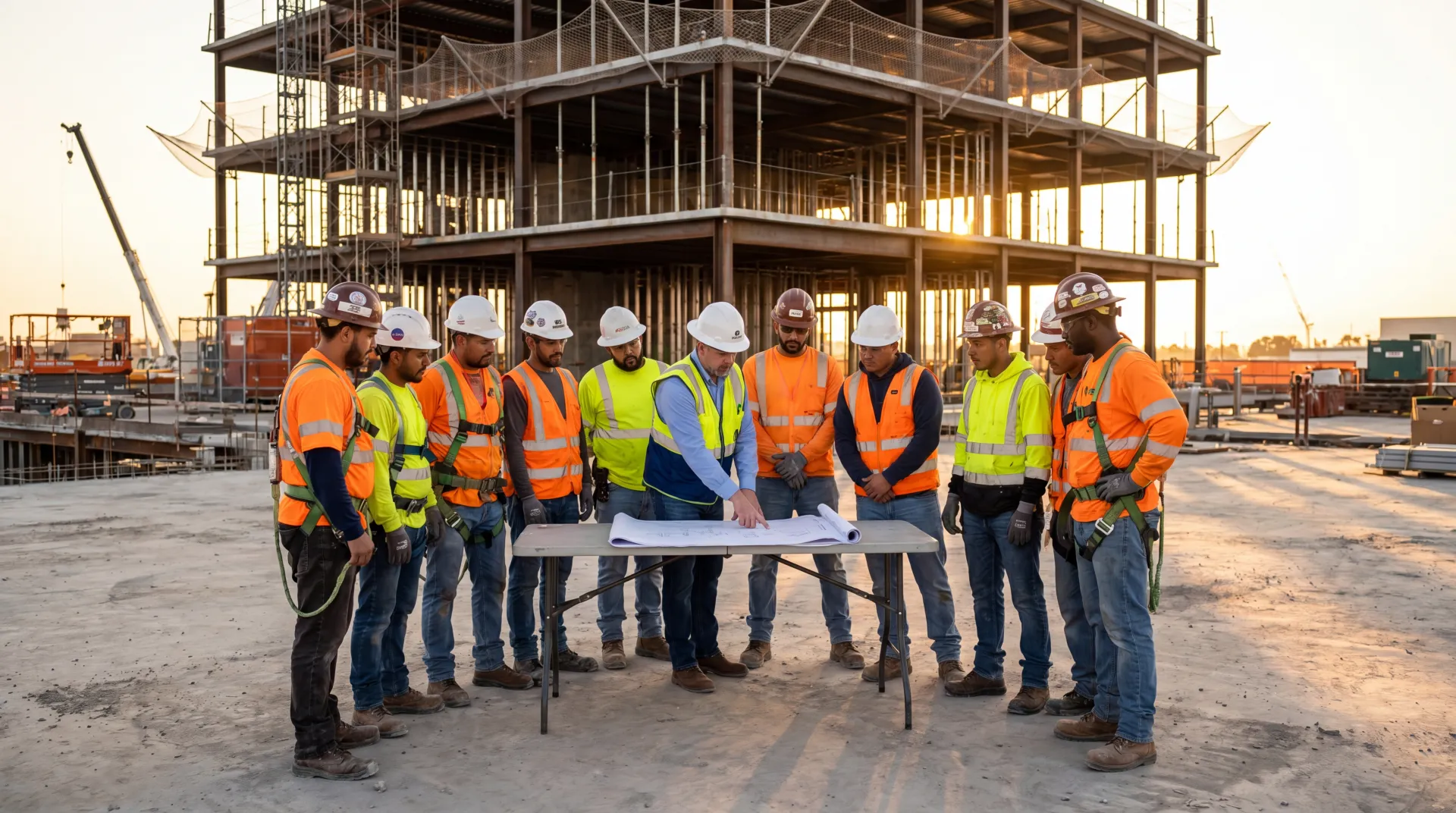
Safety training that proves your crew is ready before they step on site.
Your crew completed the training. They have the OSHA cards. But can they actually perform the procedure? AmpUp Insights verifies competency — not just completion — with continuous assessment, voice-first reference in the field, and audit-ready documentation that stands up to an OSHA inspection.
Construction has the highest fatality rate of any industry. Training should reflect that.
You already know the numbers. Falls, struck-by incidents, electrocutions, caught-in/between hazards — the Fatal Four account for more than 60% of construction fatalities every year. OSHA citations come with financial penalties. But the real cost is not the fine. The real cost is a worker who completed training, received a card, and still did not know the procedure well enough when it mattered.
The gap is not in intent. Your safety directors care. Your superintendents run their toolbox talks. Your training programs cover the material. The gap is in verification. The industry gave you tools to track who completed the training. It did not give you tools to verify who retained it.
That is what AmpUp Insights changes. Not the training itself — the measurement of whether the training worked.
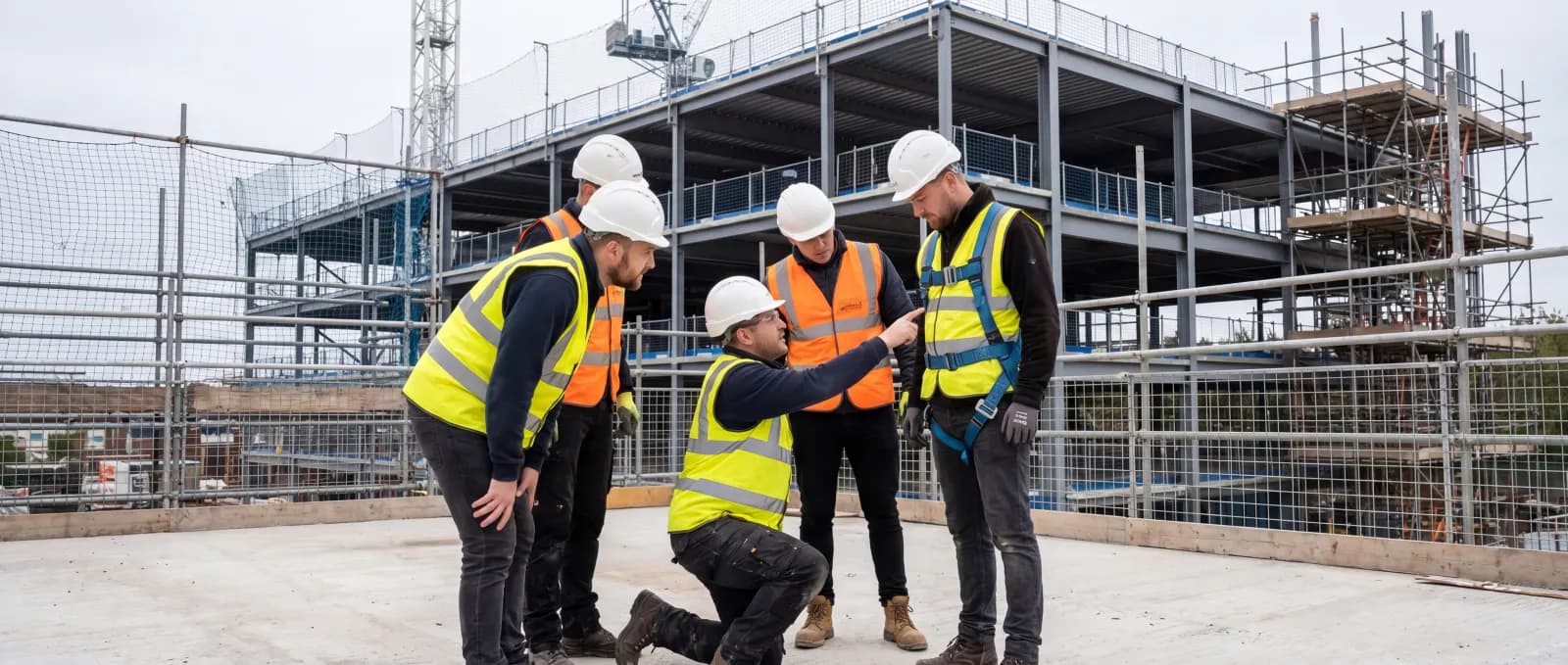
OSHA is the floor. Your standards are the ceiling.
AmpUp Insights maps to the regulatory requirements your organization is already held to:
These are the minimums. Most organizations have site-specific safety requirements, equipment-specific procedures, and GC-mandated training obligations that go beyond OSHA standards. AmpUp Insights supports custom rubrics that verify competency against your standards, not just the regulatory baseline.
An AI agent that knows your specs, your SOPs, and your site requirements.
Not just coaching. A voice-first AI agent your crew can call mid-task to look up a spec, verify a procedure, or reference a safety protocol.
Voice Active
Foreman — Site 14, West Tower
“What is the sling angle derating factor for a 60-degree rigging configuration on our current standard?”
Spoken — 0:03Per your company rigging manual (Rev. 3, Section 4.2): at a 60-degree sling angle, the derating factor is 0.866. For a 2-leg sling with a rated capacity of 10,000 lbs, your effective capacity at this angle is 8,660 lbs.
Referenced Specification
Sling Angle Derating Table — Rev. 3, Sec. 4.2
30° = 0.500 | 45° = 0.707 | 60° = 0.866 | 90° = 1.000
Technical Reference
Material data sheets, manufacturer installation guides, project specs, shop drawings, equipment manuals — structured for voice, accessible in the field.
Voice-First, Hands-Free
Your crew starts at 6 AM. They cannot take off their gloves to type. They ask a question, they get an answer. Built for people who build things while standing up.
Knowledge Retention
They completed fall protection training six months ago. Can they still tie off correctly? Automated micro-assessments verify procedural knowledge at optimized intervals.
Certification Tracking
OSHA cards, equipment certs, crane licenses — tracked with automated expiration alerts. Renewal based on demonstrated knowledge, not just time served.
One agent. Every role on the job site.
From the safety director tracking incidents across multiple sites to the installer verifying a torque spec mid-task.
Safety Director
An incident report comes in — a near-miss on a scaffolding operation. You need to know: is the crew on that site current on their scaffolding competency? When were they last assessed? You ask the agent. It pulls verification records for every crew member and flags two whose assessments are older than your 90-day recertification threshold. You make the call with the right information, documented, within minutes.
Superintendent
You have a concrete pour scheduled for tomorrow morning. You need to confirm the structural specifications for the footing dimensions before the crew arrives. You ask the agent. It pulls the specs from the project documentation. Thirty seconds, no phone calls to the office. You also verify that the assigned crew has current confined space competency — the pour is adjacent to a utility trench that qualifies as a permit-required space.
Foreman
You are rigging a load for a crane lift. The load weight is known, but you need to verify the sling angle derating factor for the configuration you are using. You ask the agent. It references your company's rigging manual and provides the derating factor. You verify the calculation and proceed with confidence — and with a logged record that you checked the spec before the lift.
Sales Representative
A GC is asking about your company's fall protection system — anchor point ratings and compatible components for a curtain wall application. You are in the truck between job sites. You ask the agent to walk you through the technical specifications. It gives you the specific anchor ratings, compatible harness models, and installation requirements. You arrive prepared for a technical conversation.
Installer / Distribution Shop
You are installing a new fire suppression system component. The manufacturer updated the installation procedure in the latest revision, and the change affects the torque specifications for the mounting hardware. You ask the agent. It confirms the current specifications from the manufacturer documentation. You install to the current spec, not the one you memorized from the previous version.
Competency data that maps to your safety record.
Incident Rate vs. Competency Verification
14 sites — trailing 12 months
See how this applies across use cases.
Safety Certification
How continuous competency verification replaces annual recertification across regulated industries.
Regulatory Compliance
Audit-ready documentation that proves competency, not just completion. Mapped to OSHA, Joint Commission, FINRA, and FAA frameworks.
Knowledge Retention
The science of spaced retrieval applied to construction safety — measuring what your crew actually remembers, not what they once completed.
See what your training actually changed.
Book a demo tailored to your sites and your safety requirements.